

Duct replacement is one of those projects that rarely comes up in casual conversation about home maintenance, yet it has a direct effect on how well an HVAC system performs, how much energy it consumes, and what is actually circulating through the air in your home. For Largo homeowners facing this decision, understanding what a duct change-out actually involves, when it makes sense, and what to expect from the process removes a significant amount of uncertainty from what can feel like an unfamiliar and expensive undertaking.
Largo’s housing stock includes everything from older concrete block homes near the downtown corridor and communities close to the Pinellas Trail to newer construction further east. The age and condition of ductwork vary considerably across these properties, and what makes sense for one home may not be the right approach for another.
What a Duct Change-Out Actually Is
A duct change-out is the process of removing the existing duct system in a home and replacing it with new materials and connections. It is a more involved project than duct cleaning or targeted duct repair, and it is the appropriate solution when the existing system has deteriorated beyond what cleaning or patching can reasonably address.
The scope of a duct change-out typically covers all supply and return ducts, the connections between duct sections, boots where ducts connect to registers, and, in many cases, the insulation surrounding flexible ductwork. The goal is to leave the home with a properly sealed, adequately sized, and correctly routed duct system that supports the performance of the current HVAC equipment.
When Replacement Makes More Sense Than Repair
This is the first question most homeowners have when duct issues are identified, and it does not have a single universal answer. The condition of the existing system, its age, the extent of the problems found, and the cost of comprehensive repair relative to replacement all factor into the recommendation a qualified technician should be able to provide.
In our service calls throughout Largo and the Pinellas County area, duct replacement tends to make more sense than repair when the system is more than 15 to 20 years old and showing widespread deterioration rather than isolated damage. Flex duct that has been in place since the late 1990s or early 2000s has gone through significant thermal cycling in Florida’s attic conditions, where summer temperatures regularly exceed 130 degrees. The inner liner degrades, insulation compresses, and connections loosen over time in ways that cannot be fully addressed by sealing individual gaps.
When duct inspection reveals problems at multiple points throughout the system, the cumulative cost of addressing each one individually often approaches or exceeds the cost of a full replacement. In that situation, patching extends the life of a system that will continue to develop new problems rather than providing a durable solution.
What the Inspection Process Should Cover
A responsible duct change-out recommendation should be based on a thorough inspection of the existing system rather than a visual assessment from the attic hatch. Before any work is quoted, a technician should be able to document the current duct layout, the condition of the flex duct and connections throughout the system, evidence of leakage and its approximate locations, whether existing duct sizing is appropriate for the current HVAC equipment, and any access or routing challenges that will affect the installation process.
Working in homes across Largo, we find that duct systems sometimes have configurations that made sense at the time of original installation but have not kept pace with changes to the home or the HVAC equipment serving it. A system that was designed around older, lower-efficiency equipment may not be properly sized for a newer high-efficiency unit. Duct replacement is an opportunity to correct sizing and routing alongside the material replacement.
What a Properly Executed Duct Change-Out Involves
The replacement process begins with removing the existing ductwork from the attic or crawl space, including all flex duct sections, connections, insulation, and hardware. This is more involved than it sounds in older homes, where multiple layers of installation may have accumulated over the years.
New ductwork is then installed according to a layout that accounts for the current equipment, the home’s room configuration, and the airflow requirements for each space. Proper sizing of each duct run is determined by the volume of air each room needs and the distance that air must travel from the air handler. Connections are sealed with mastic or appropriate tape, not just overlapped and hoped for. New boots connect the duct system to the registers in each room.
A duct change-out that is done correctly results in a system with minimal leakage, proper airflow distribution to each room, and adequate insulation to prevent heat gain in the ducts as air travels through an unconditioned attic space.
After installation, the system should be tested to verify that airflow is reaching each room as intended and that the HVAC equipment is operating within expected parameters with the new duct system in place.
How Duct Condition Connects to Indoor Air Quality
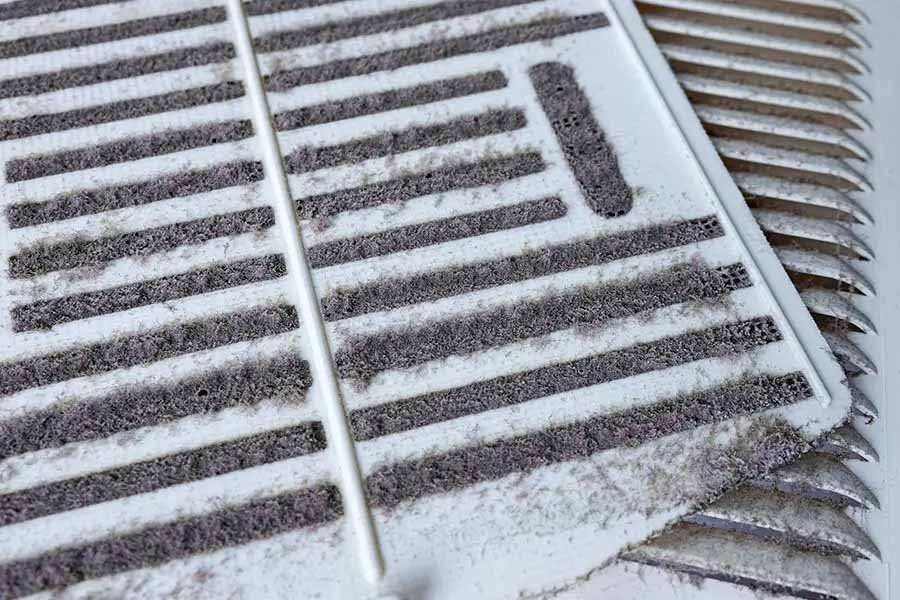
Duct replacement addresses more than airflow and efficiency. The condition of the duct system has a direct effect on what circulates through the air inside your home. Ducts that have been deteriorating for years accumulate dust, biological growth, and in some cases, pest debris in the spaces between the inner liner and the outer jacket of the flex duct where visual inspection cannot reach.
Based on what we see in Largo properties, homes with aging flex ducts sometimes have conditions inside the duct system that cleaning cannot fully resolve. The degraded insulation layer between the inner liner and outer jacket becomes a reservoir for accumulated material that continues to affect the air quality of the home as long as that ductwork remains in place.
Replacing the duct system eliminates that source of contamination and gives the indoor air quality in the home a clean starting point that cleaning of the old system could not achieve.
Permit and Code Requirements in Largo, FL
Duct replacement work in Largo, FL, requires permits through Pinellas County, and that requirement exists for practical reasons. A permitted installation is subject to inspection, which provides a layer of quality assurance that protects the homeowner. An inspector who reviews the completed work verifies that the installation meets current mechanical code requirements, that duct sizing and connections are appropriate, and that the work was completed as described.
Unpermitted ductwork creates complications that surface during home sales, insurance claims, and future renovation work. Any contractor proposing duct replacement in Largo, FL, who does not plan to pull a permit is worth questioning before proceeding.
What to Expect in Terms of Project Timeline
A typical residential duct change-out in a single-story home can often be completed in one day by an experienced crew with the right materials and equipment. Two-story homes, homes with complex attic configurations, or properties with limited access points take longer. The HVAC system will be out of service during the installation, which is a practical consideration for scheduling in Largo’s climate.
Pre-season scheduling in early spring, before peak cooling demand arrives, is generally the most practical approach. Service schedules fill up as summer approaches, and completing a duct replacement before the heat arrives means the new system is in place and tested before it is actually needed most.
How Duct Replacement Fits Into Broader HVAC Planning
A duct change-out often comes up in the context of other HVAC decisions rather than as a standalone project. Homeowners replacing aging air conditioning equipment sometimes discover during that process that the existing ductwork is not in good enough condition to serve the new equipment effectively. Installing a new high-efficiency system on a leaky, undersized duct network limits the performance of the new equipment from day one.
In those situations, addressing the duct system alongside the equipment replacement is the more complete solution. It also tends to be more cost-effective than returning to replace the ducts separately a few years later after the new equipment has been running on a compromised delivery system.
Conversely, a duct change-out can reveal that the existing HVAC equipment is in better condition than previously assumed and is capable of performing well once the delivery system is corrected. A proper AC maintenance evaluation alongside the duct assessment gives a clearer picture of where the system as a whole stands.
Making the Right Decision for Your Home in Largo
A duct change-out is a meaningful investment, and it deserves a careful, informed decision-making process. The right starting point is a thorough inspection by a qualified HVAC contractor who can document the current system’s condition and explain clearly why replacement makes more sense than repair in your specific situation. If that case cannot be made clearly and specifically, the recommendation is worth questioning.
Egberts Electrical Plumbing Air Conditioning serves Largo and the surrounding Pinellas County area and can assess your duct system as part of a comprehensive HVAC evaluation. Contact our team today to schedule an inspection and get an honest picture of what your ductwork actually needs.