When an air conditioner stops performing the way it should, the first step toward resolving the problem is understanding what is actually wrong. That process, the AC repair evaluation, is where a qualified technician assesses the system, identifies the source of the issue, and gives the homeowner the information needed to make a sound decision about what comes next.
For many Lakeland homeowners, this visit is unfamiliar territory. Knowing what a thorough evaluation looks like, what questions are worth asking, and how to interpret what a technician tells you makes the experience more useful and helps you avoid decisions made under pressure without adequate information.
Why the Evaluation Matters as Much as the Repair
An AC repair is only as good as the diagnosis behind it. A technician who replaces a component without fully evaluating the system may resolve the immediate symptom while leaving an underlying cause in place. The problem returns, sometimes within the same season, and the homeowner is left wondering why the repair did not hold.
In our service calls throughout Lakeland and Polk County, the evaluations that lead to lasting repairs are the ones that treat the presenting symptom as a starting point rather than a conclusion. A system blowing warm air, for example, could involve a failing compressor, low refrigerant from a leak, a frozen evaporator coil, a faulty capacitor, or an electrical issue affecting the outdoor unit. Each of those causes has a different repair path, and misidentifying the source means the wrong path gets followed.
A thorough evaluation takes the time to distinguish between those possibilities before any work is recommended.
What Happens During a Professional AC Evaluation
Initial System Assessment
A qualified technician begins by gathering information about what the system has been doing and what the homeowner has noticed. How long has the problem been present? Has the system been making unusual sounds? Are certain rooms warmer than others? Has there been any recent work done on the system?
This context shapes how the technician approaches the physical inspection. A system that has been short-cycling for two weeks tells a different story than one that failed completely overnight, and the questions that direct the diagnosis are different in each case.
Thermostat and Controls Check
The evaluation starts at the control side of the system. The thermostat is checked for accurate temperature reading, proper communication with the air handler and outdoor unit, and correct function of all settings. Based on what we see in Lakeland properties, thermostat issues are a more common cause of system problems than homeowners tend to expect, and ruling them out early focuses the rest of the inspection on the mechanical components.
Wiring at the air handler and the connections between the thermostat and the system are also reviewed at this stage. Low-voltage wiring faults can produce symptoms that resemble equipment failures, and catching those before assuming a mechanical cause saves time and avoids unnecessary part replacements.
Airflow Evaluation
Airflow problems account for a significant portion of AC performance complaints, and a proper evaluation includes assessing airflow at multiple points in the system. The technician checks the condition of the air filter, inspects the evaporator coil for buildup that would restrict airflow across its surface, and evaluates whether the blower motor is operating at the correct speed.
Static pressure in the duct system may also be checked if the evaluation suggests an airflow issue that is not explained by the equipment itself. In Lakeland, FL, homes with aging flex duct or duct configurations that were not properly sized for the current equipment, duct-related airflow restrictions can produce symptoms that appear to originate at the air handler.
Refrigerant Pressure Check
Refrigerant levels are verified using gauges connected to the system’s service ports. The readings are compared against the manufacturer’s specified operating pressures for the current outdoor conditions. Pressures that fall outside the expected range indicate either a leak that has reduced the refrigerant charge or an overcharge from a previous service that added too much.
A low refrigerant reading is not a standalone diagnosis. It tells the technician that refrigerant has escaped the system, but it does not identify where the leak is. A responsible evaluation follows a low-pressure reading with leak detection rather than simply adding refrigerant and closing the ticket. Adding refrigerant to a system with an active leak returns the charge to normal temporarily while leaving the underlying problem unaddressed.
Electrical Component Testing
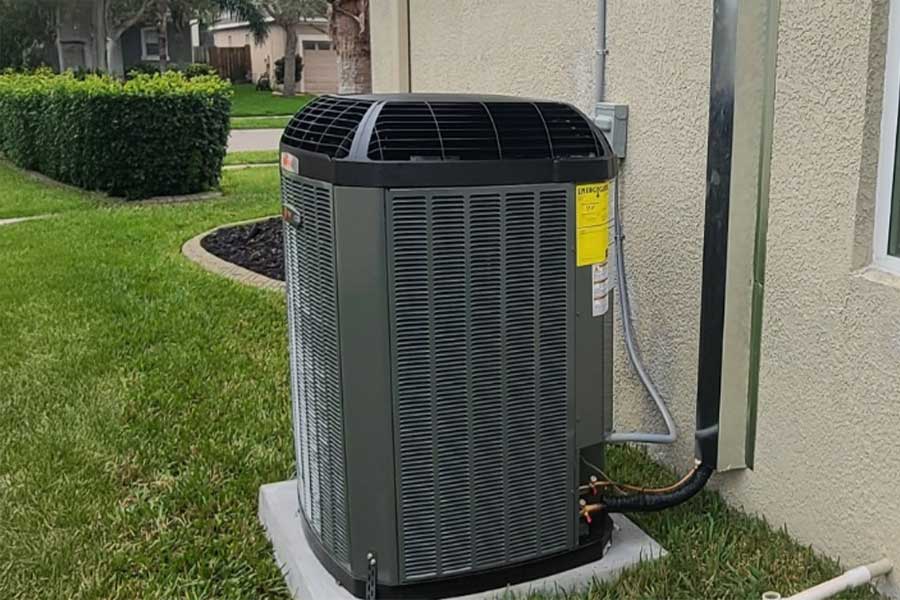
The outdoor unit’s electrical components are checked as part of every thorough evaluation. Capacitors are tested for their ability to hold charge within manufacturer specifications. Contactors are inspected for wear and pitting on the contact surfaces. The disconnect and wiring connections at the outdoor unit are reviewed for signs of heat damage or corrosion.
Working in homes across Lakeland, capacitor testing is one of the more consistently productive parts of this inspection. Capacitors in Florida systems fail at a higher rate than in cooler climates due to the extended operating seasons and sustained heat. A capacitor that is reading outside its rated tolerance may not have caused a failure yet, but is likely to do so under the stress of peak summer demand.
Compressor Evaluation
The compressor is assessed through a combination of pressure readings, amperage measurements, and direct observation of how it starts and runs. A compressor drawing significantly more current than its rated operating amperage is working harder than it should, which can indicate internal wear or operating conditions that are adding unnecessary load.
Hard starting, where the compressor struggles to begin a cycle, is noted and considered alongside capacitor test results. In some cases, a hard start kit can reduce the startup strain on an aging compressor. In others, the compressor condition points toward a more significant repair or replacement conversation.
Condensate System Check
The condensate drain pan and drain line carry the moisture that the evaporator coil removes from the indoor air. A blocked condensate line is one of the more common causes of system shutdowns in Florida, where the volume of moisture the system removes during the cooling season is substantial. Most modern air handlers have a safety switch that shuts the system down when the drain pan fills, which protects the home from water damage but leaves homeowners without cooling until the blockage is cleared.
The drain pan is checked for standing water and biological buildup. The drain line is evaluated for restriction. This is a straightforward part of the evaluation but one that is easy to overlook in a rushed service call.
What the Technician Should Tell You After the Evaluation
A thorough evaluation ends with a clear explanation of what was found, what it means for the system’s performance and condition, and what the options are for addressing it. That explanation should cover what the primary cause of the problem is, whether any secondary conditions were observed that could cause future issues, what the recommended repair involves and what it costs, and whether the age or overall condition of the system affects the value of investing in the repair.
That last point matters more than it sometimes gets acknowledged. A repair that makes complete sense on a four-year-old system may be worth weighing more carefully on a fourteen-year-old system that has already had several service visits. A technician who gives you an honest assessment of where the system stands overall, not just what the immediate repair requires, is giving you the information you actually need.
Questions Worth Asking During the Evaluation
Homeowners who engage actively with the evaluation process get more useful information than those who wait passively for a verdict. A few questions worth raising:
What specifically caused this problem, and is there a secondary cause that contributed to it? If you add refrigerant, where is the leak, and how will it be addressed? How does the condition of the rest of the system factor into this recommendation? Is this repair likely to resolve the problem durably, or are there other conditions that could produce a similar failure?
These are not adversarial questions. They are the kind of questions a qualified technician expects and should be able to answer clearly.
How Evaluation Findings Connect to Broader System Care
What a technician finds during an AC repair evaluation often has implications beyond the immediate repair. A system with a failing capacitor that is also running with a slightly elevated refrigerant charge and a condenser coil showing early signs of fouling benefits from having all of those conditions addressed together rather than one at a time across multiple visits.
This is also where AC maintenance history becomes relevant. A system that has been receiving regular maintenance has documented baseline performance data that makes the evaluation more informative. A technician who has serviced the system before knows what normal looks like for that specific unit and can identify deviations from that baseline more accurately than one coming in without any prior history.
For Lakeland homeowners whose systems have not had maintenance in some time, the evaluation visit is also an opportunity to assess whether a thermostat repair or installation is part of the picture, since thermostat condition is directly relevant to how accurately the system is being controlled and whether reported symptoms are equipment-based or control-based.
What a Complete Evaluation Looks Like in Practice
A thorough AC repair evaluation in a typical Lakeland home takes time. It is not a five-minute visual check followed by a part recommendation. The steps described above, from the initial system assessment through refrigerant pressure checks, electrical testing, and compressor evaluation, require the technician to work through the system methodically rather than jumping to the most obvious conclusion.
If a service visit feels rushed or concludes with a repair recommendation that was reached without the technician having checked multiple system components, it is reasonable to ask how the diagnosis was arrived at and what was specifically tested. A qualified technician will be able to walk through their findings clearly.
Getting a Clear Picture of Your System in Lakeland, FL
An AC repair evaluation done well gives you something valuable beyond the immediate repair: an accurate picture of where your system stands and what decisions may be coming. In Lakeland, FL, where cooling systems carry a serious workload for most of the year, that information has practical value for planning maintenance, budgeting for eventual replacement, and avoiding the kind of reactive emergency calls that tend to happen when problems are caught late rather than early.
Egberts Electric and Air Conditioning serves Lakeland and the surrounding Polk County area. Contact our team today to schedule an evaluation and get a clear, honest assessment of your system’s condition.