
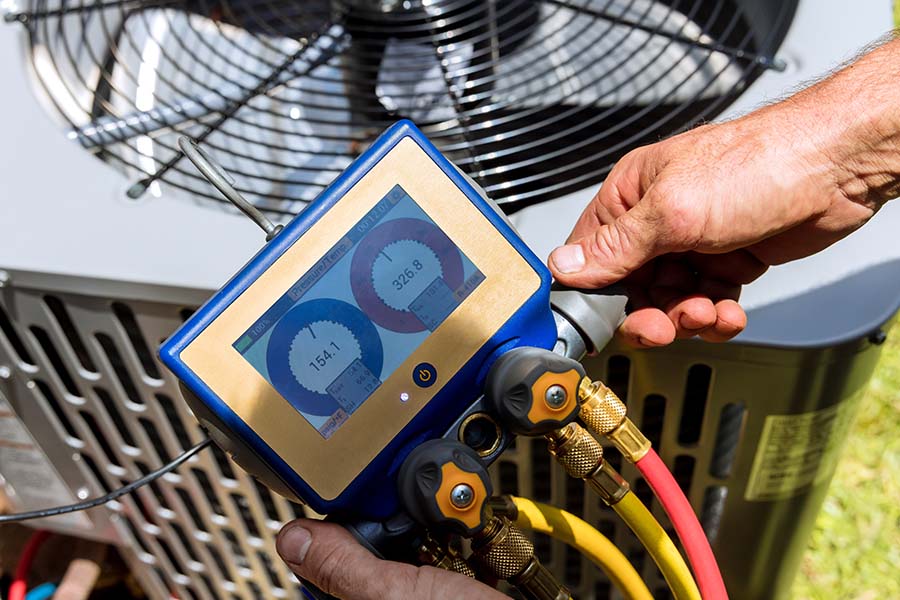
A refrigerant leak that causes manageable performance issues during mild weather can become a genuine problem when summer heat arrives in Brandon, FL. The gap between a system that is slightly underperforming and one that cannot cool the home at all tends to narrow quickly once outdoor temperatures climb and the system is asked to run at full capacity for hours at a time.
Understanding why heat amplifies the consequences of refrigerant loss, what that looks like in practice, and why prompt repair matters more during the hottest months helps homeowners make better decisions when this kind of problem surfaces.
How Refrigerant Loss Affects Cooling at the System Level
Refrigerant does not get consumed during normal operation. A properly sealed system retains its full charge indefinitely, cycling the same refrigerant continuously through the heat transfer process. When levels drop, it is because refrigerant has escaped through a leak somewhere in the circuit, and the system is now attempting to do the same work with less of the substance that makes that work possible.
The heat transfer process depends on the refrigerant moving through specific pressure and temperature conditions as it cycles between the indoor evaporator coil and the outdoor condenser coil. When the charge is low, those conditions shift outside of the range the system was designed to operate within. The evaporator coil cannot absorb heat as effectively, the condenser cannot release it as efficiently, and the compressor is working against pressures that add strain to its operation.
During mild conditions, a system with a modest refrigerant deficit may still manage to maintain a reasonable indoor temperature, simply running longer cycles than it should to compensate. The performance gap is real but not always obvious until the system is tested under conditions that demand more from it.
What Changes When Extreme Heat Arrives in Brandon, FL
Brandon, FL, sits in central Hillsborough County, where summer heat routinely pushes into the low to mid-90s with humidity that makes the felt temperature considerably higher. During extended heat waves, outdoor temperatures stay elevated through the evening hours, giving the system no recovery period and requiring it to run nearly continuously to maintain indoor comfort.
That sustained demand exposes the full extent of a refrigerant deficit in ways that mild conditions mask. A system that was managing in the high 70s begins to fall short in the low 90s. The longer cycles that were compensating adequately become continuous operations that still cannot reach the setpoint. What was an efficiency problem becomes a comfort problem, and eventually a situation where the home is simply not cooling despite the system running without interruption.
In our service calls throughout Brandon and Hillsborough County during peak summer heat, refrigerant-related calls follow a consistent pattern. Systems that showed mild symptoms earlier in the season reach a breaking point once sustained high temperatures arrive. The heat wave did not create the leak. It revealed the full consequences of a leak that had been present and losing charge for some time.
The Compressor Carries the Heaviest Consequence
The connection between refrigerant loss and compressor damage is the most significant reason why addressing a leak promptly matters more than the comfort impact alone. The compressor is designed to operate within specific suction and discharge pressure ranges. When refrigerant levels fall, suction pressure drops below those designed parameters, and the compressor runs hotter than it was built to sustain.
Extended operation under low refrigerant conditions causes the compressor motor windings to overheat, lubricating oil to break down, and internal components to wear at an accelerated rate. In Brandon’s summer heat, where ambient temperatures are already adding thermal load to the system, that compressor stress compounds quickly.
A compressor that has been running in low refrigerant conditions through a sustained heat wave may sustain damage that does not manifest as an immediate failure but shortens its remaining service life significantly. The leak that went unaddressed for a season may not produce a compressor failure that summer, but it contributes to one in the seasons ahead.
Compressor replacement is one of the most expensive repairs in an HVAC system. The cost of a refrigerant leak repair is considerably lower, and addressing the leak before it has run through multiple cycles of extreme heat is the practical way to protect the more expensive component.
How Leaks Develop in Brandon, FL Homes
Refrigerant leaks in residential systems develop through several mechanisms, and the local environment shapes which ones appear most frequently.
Formicary Corrosion on Evaporator Coils
Formicary corrosion occurs when formic acid, present in indoor air from building materials, cleaning products, and other household sources, reacts with the copper in the evaporator coil in the presence of moisture. The result is small pinholes in the coil walls through which refrigerant escapes gradually. This type of corrosion is common in Florida homes where high humidity keeps coil surfaces consistently moist during the cooling season.
In our service calls throughout the Bloomingdale area and communities along Providence Road in Brandon, FL, evaporator coil corrosion is a consistent finding in systems that have been in service for eight or more years. The pinholes are small enough that the leak progresses slowly, which is why the system may function for months with gradually declining performance before the refrigerant loss becomes critical.
Connection and Fitting Failures
Vibration from the compressor and other moving components puts ongoing stress on refrigerant line connections and fittings over the life of the system. Connections that have loosened over years of thermal cycling and mechanical vibration develop small gaps through which refrigerant escapes slowly. These leaks are often found at the service valves, flare connections, or where refrigerant lines connect to the coils.
Physical Damage to Refrigerant Lines
In Brandon, FL, neighborhoods where outdoor units are surrounded by maturing landscaping, physical contact between plant growth and refrigerant lines is a real factor. The insulation on refrigerant lines can be compromised by contact with vegetation, irrigation equipment, or accidental impact, and damaged insulation accelerates the deterioration of the copper line underneath.
What Proper Leak Repair Actually Involves
The refrigerant charge in a system with a confirmed leak needs to be addressed in the correct sequence. Adding refrigerant to a system without locating and sealing the leak extends the operating window temporarily but does not solve the problem. The charge added today escapes through the same path, and the system returns to the same degraded condition within weeks or the same season.
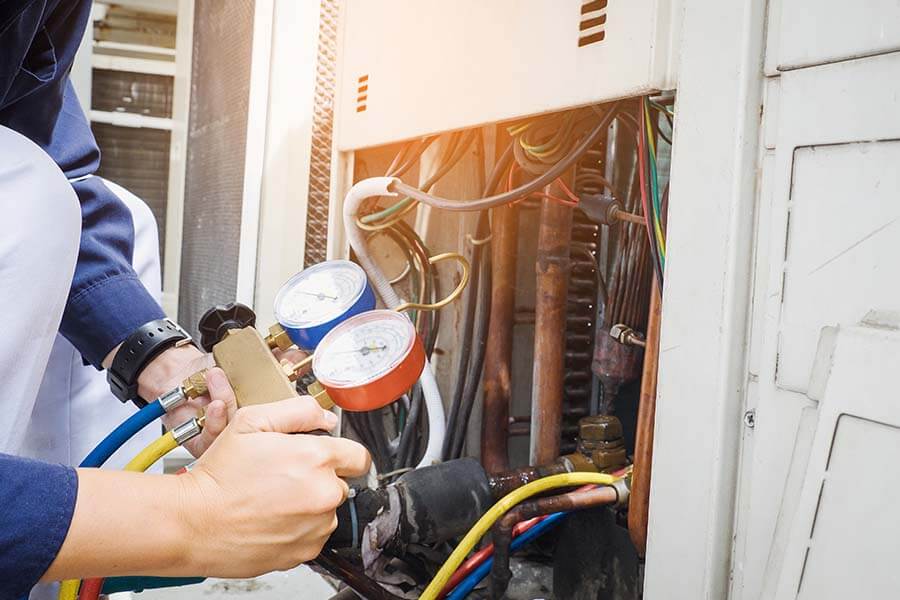
A proper repair starts with leak detection using electronic detection equipment or pressure testing to identify where the refrigerant is escaping. The repair method at that point depends on the location and cause of the leak. Connection-based leaks can often be addressed directly at the fitting. Evaporator coil leaks from formicary corrosion are more complex, and depending on the extent of the damage and the age of the coil, the assessment may point toward coil replacement rather than attempting to seal a coil with widespread pinhole damage.
After the leak is sealed and the system is verified to hold pressure, the refrigerant charge is restored to the manufacturer’s specified level for the equipment. Accurate charging requires proper gauges and knowledge of the system’s design parameters. Both overcharging and undercharging produce operating conditions that add strain to the system.
Recognizing the Signs During Summer Heat
During Brandon’s peak cooling season, the signs of low refrigerant are easier to observe because the system is being asked to perform at its highest demand level. Patterns worth paying attention to include a system that runs continuously without reaching the thermostat setpoint, indoor temperatures that rise through the afternoon despite the system not cycling off, ice formation on the refrigerant lines or indoor unit, a hissing or bubbling sound near the indoor air handler, and energy bills that are noticeably higher than the same period in prior years.
Ice on the indoor unit during summer is a particularly clear signal. When the evaporator coil runs too cold due to low refrigerant pressure, moisture in the air freezes on contact with the coil surface and accumulates until airflow is blocked entirely. The system appears to be running, but is no longer cooling because the frozen coil cannot absorb heat from the air passing over it. This situation requires the ice to thaw completely before the system can be properly assessed, which means the home goes without cooling for an extended period during the diagnostic process.
Catching the earlier, less dramatic signs before ice forms allows for a faster resolution with less disruption to household comfort during the season’s most demanding weeks.
Connecting Leak Repair to Ongoing System Care
Refrigerant leaks tend to surface during or just before peak demand because that is when the system’s margin for operating with a reduced charge runs out. Addressing the leak after it has already caused a crisis during extreme heat is more disruptive and potentially more expensive than catching it during a pre-season evaluation.
Regular AC maintenance that includes a refrigerant pressure check gives a technician the opportunity to identify a developing leak before the charge has dropped to a level that affects performance. A system heading into Brandon’s summer heat with a verified proper refrigerant charge and a recently inspected coil is better protected against the kind of failure that surfaces during the first extended heat wave of the season.
When a leak is identified alongside other system issues, a broader AC repair assessment ensures that all contributing factors are addressed together rather than discovering additional problems after the refrigerant repair has been completed.
Protecting Your Home’s Cooling Through Brandon’s Hottest Months
Refrigerant leaks do not improve on their own, and the consequences of leaving them unaddressed grow as outdoor temperatures rise and the system’s demand increases. The practical approach is to address the leak with a proper repair rather than a temporary recharge, and to do so before the heat of the season pushes a manageable problem into a critical one.
Egberts Electric and Air Conditioning serves Brandon and the surrounding Hillsborough County area. Contact our team today to schedule a system assessment and get an honest evaluation of your refrigerant system before peak demand arrives.