
Florida leads the country in lightning strikes, and Kissimmee sits squarely in the middle of one of the most lightning-active corridors in the state. The stretch of Central Florida running through Osceola County sees frequent afternoon thunderstorms throughout a storm season that lasts from late spring well into fall. For homeowners in this area, the question of whole-house surge protection is not abstract. It is a practical response to a real and recurring threat.
Voltage surges do not only come from lightning, though. Internal surges from large appliances cycling on and off, utility switching events, and power restoration after outages all introduce voltage spikes into a home’s electrical system. Whole-house surge protection addresses all of these sources, not just the dramatic lightning strike scenario most homeowners picture when the subject comes up.
Here are seven reasons Kissimmee homeowners specifically benefit from having this protection in place.
1. Central Florida’s Lightning Exposure Is Among the Highest in the Country
This is the most straightforward reason on the list, and it is worth stating plainly. The Tampa Bay to Cape Canaveral corridor, which runs directly through Osceola County, is one of the most lightning-dense regions in North America. Kissimmee sees dozens of lightning days per year, with peak activity concentrated in the afternoon hours of summer when convective storms build rapidly over the warm Florida landscape.
A direct lightning strike to a home’s electrical service can send a massive voltage surge through every connected circuit simultaneously. But near-miss strikes, those that hit nearby trees, utility poles, power lines, or the ground within a significant radius of the home, produce induced surges that travel through the utility lines into the home without a direct strike. These events are far more common than direct hits and are still capable of damaging electronics and appliances.
Working in homes across Kissimmee and the broader Osceola County area, storm-related electrical damage is one of the more consistent findings we encounter during post-storm service calls. The frequency of the threat in this specific location makes surge protection a practical priority rather than an optional add-on.
2. Modern Homes Contain Far More Surge-Sensitive Equipment
The electrical environment inside a home has changed considerably over the past two decades. Appliances that were once simple mechanical devices now contain electronic control boards, microprocessors, and sensitive components that are vulnerable to voltage irregularities that would have had no effect on older equipment.
Refrigerators, washing machines, HVAC systems, dishwashers, and ovens all contain circuit boards that can be damaged or destroyed by a voltage spike. Smart home devices, home security systems, and connected appliances add further sensitive equipment to the inventory. The cost of replacing or repairing these items after a surge event can substantially exceed the cost of the whole-house surge protection that would have prevented the damage.
Based on what we see in Kissimmee properties, the homes that experience the most costly storm-season damage are those where multiple appliances and electronics were connected without protection when a surge event occurred. The cumulative replacement cost across several damaged items adds up quickly.
3. HVAC Systems Are Particularly Vulnerable
Air conditioning systems represent a significant portion of a home’s electrical load and contain some of the most expensive surge-sensitive components in the house. The control board that manages system operation, the variable-speed motors in newer high-efficiency equipment, and the electronic components in smart thermostats are all vulnerable to voltage surges.
In Kissimmee, FL, where AC systems run heavily through a long cooling season, these components are already working hard when storm season arrives. A surge event that damages an AC control board or compressor during the peak of summer creates a genuine hardship situation, not just a repair bill. The timing is rarely convenient, and the repair cost for a damaged control board or a failed compressor motor can be substantial.
A whole-house surge protector installation guards the HVAC system alongside everything else in the home, which is particularly relevant given that the AC is both one of the most expensive systems to repair and one of the least convenient to be without in Central Florida’s summer heat.
4. Internal Surges Cause Cumulative Damage Over Time
Lightning gets most of the attention when surge protection comes up, but internal surges from large motor-driven appliances are a more frequent and less recognized source of electrical stress. Every time a compressor, refrigerator motor, washing machine, or air conditioner cycles on, it draws a surge of current that produces a small voltage spike on the circuit. These spikes are far smaller than a lightning-induced surge, but they occur constantly throughout the day and accumulate as ongoing stress on sensitive electronic components.
This cumulative effect is sometimes called electronic rust. Devices and appliances appear to be functioning normally while their internal components are being gradually degraded by repeated low-level voltage irregularities. The result shows up as shorter-than-expected equipment lifespans, intermittent malfunctions, or failures that seem to occur without a clear cause.
Whole-house surge protection at the panel level reduces the magnitude of these internal spikes before they reach sensitive devices, extending the effective service life of electronics and appliances throughout the home.
5. Point-of-Use Surge Strips Are Not Comprehensive Protection
Many homeowners already use surge strips for computers, televisions, and entertainment systems. This is a reasonable starting point, but it leaves significant gaps in protection. Major appliances like refrigerators, washing machines, dryers, and HVAC systems are typically plugged directly into wall outlets without any surge protection at the device level. Hardwired equipment like the AC air handler has no practical point-of-use protection option at all.
Point-of-use surge strips also vary considerably in their actual protective capability, and their internal protective components degrade over time and with each surge event they absorb. Many strips provide no indication of whether their protection is still functional, leaving homeowners with a false sense of security from a device that is no longer providing meaningful protection.
Whole-house surge protection at the main electrical panel addresses the entire home’s connected equipment in a single installation. It does not replace point-of-use protection for the most sensitive electronics, but it works as the first line of defense that reduces surge magnitude before it reaches any device in the home.
6. The Protection Is Relatively Simple to Install
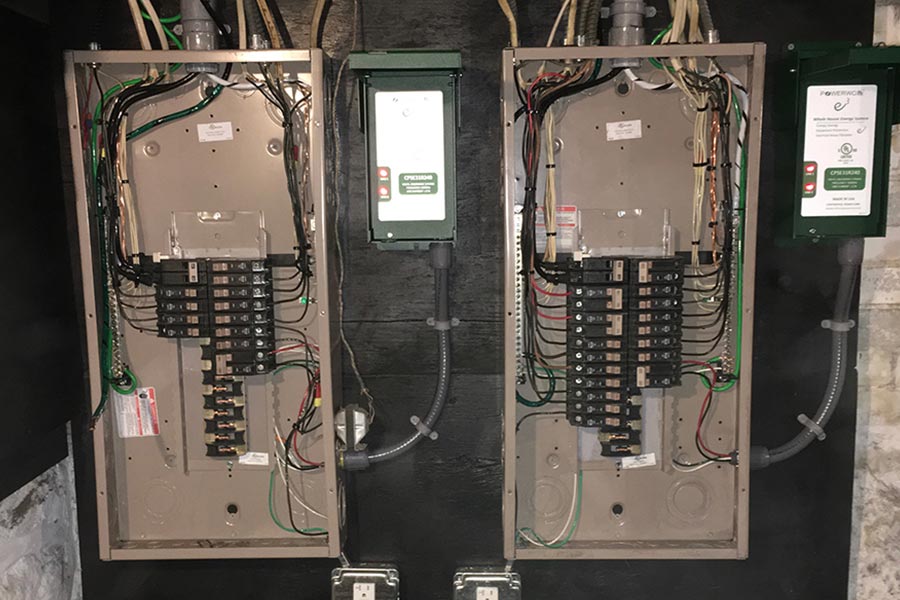
A whole-house surge protector is installed at or near the main electrical panel and connected to the panel’s bus bars. It does not require rewiring the home, adding circuits, or disrupting existing electrical connections. For most Kissimmee homes, the installation is completed in a single visit by a licensed electrician.
The installation needs to be done correctly to provide effective protection. The ground connection is particularly important, since a surge protector that is not properly grounded cannot divert excess voltage away from the home’s circuits effectively. This is one reason why the work should be handled by a licensed electrician rather than treated as a homeowner project.
For homes that have had an electrical panel repair or replacement in recent years, adding whole-house surge protection at the same time or shortly afterward is a natural extension of that electrical investment. A panel upgrade improves capacity and safety, and surge protection preserves the equipment connected to that panel.
7. The Cost-Benefit Case Is Straightforward
Whole-house surge protection represents a one-time installation cost that is modest relative to the value of the equipment it protects. A single surge event that damages a refrigerator, an HVAC control board, a washing machine, and several connected devices can easily cost several thousand dollars in repairs and replacements. The installation cost of whole-house surge protection is a fraction of that exposure.
In Kissimmee, where the frequency of storm activity makes surge events a realistic annual possibility rather than a remote risk, the cost-benefit calculation is particularly clear. The question is not really whether a surge event might occur. It is whether the home’s equipment is protected when one does.
Insurance may cover some surge-related damage, but deductibles, coverage limits, and the process of filing a claim create friction and cost even when a claim is successful. Prevention is a simpler and more reliable outcome than recovery.
Protecting Your Home Through Kissimmee’s Storm Season
The combination of high lightning frequency, increasingly surge-sensitive home equipment, and the real cost of storm-related electrical damage makes whole-house surge protection a practical and well-justified investment for Kissimmee homeowners. The protection it provides is immediate, comprehensive, and does not require any ongoing attention once it is properly installed.
Egberts Electric and Air Conditioning serves Kissimmee and the surrounding Osceola County area and provides whole-house surge protector installation as part of a broader range of residential electrical services. Contact our team today to schedule an installation and get your home protected before storm season arrives.