


Largo sits in the middle of Pinellas County with the Gulf on one side and Tampa Bay on the other, and salt air reaches almost every neighborhood in between. That salt is invisible but it is constantly at work on anything metal sitting outside, including your heat pump.
Add in a dense collection of block homes built in the 1950s through the 1970s and a long cooling season, and you get equipment that ages faster than the manufacturer ever planned for. Egberts Electrical Plumbing Air Conditioning repairs heat pumps across Largo with that reality in mind.
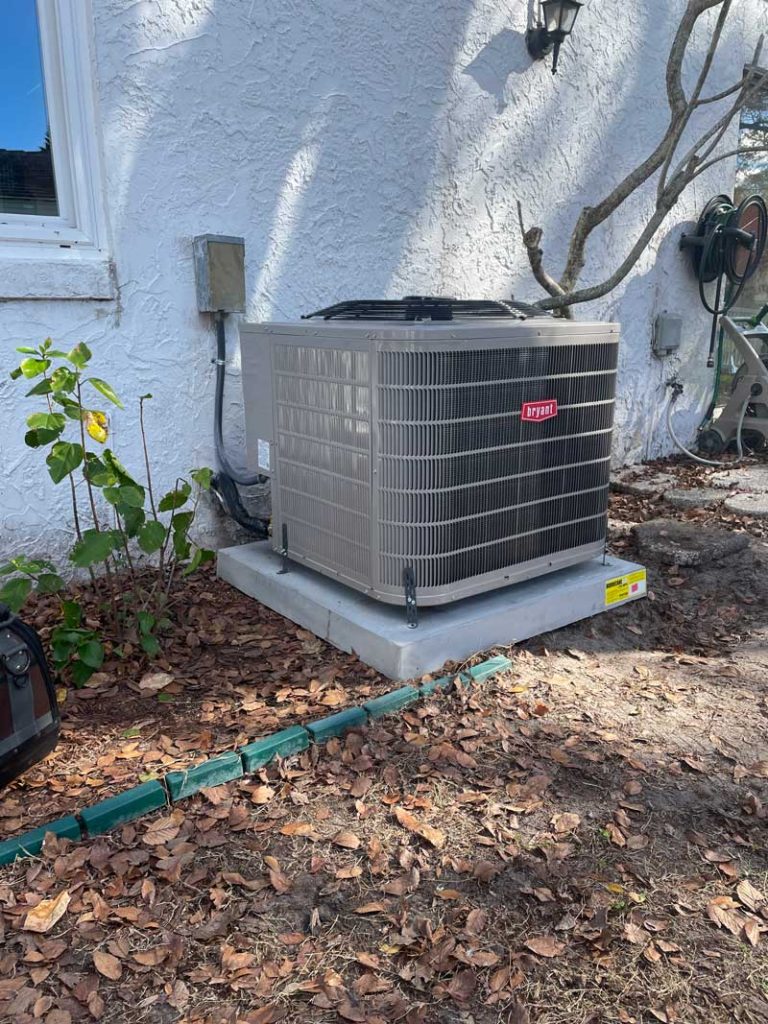
Coastal equipment often degrades gradually instead of failing all at once. These signs are the warning.
Anything on this list deserves a look, because corrosion related failures usually get worse rather than stabilizing.

Salt is the main antagonist here. It settles on condenser fins and eats away at the aluminum and copper, which reduces heat transfer and eventually opens pinhole leaks. Units on the Gulf side of town often show visible corrosion within a handful of years.
Electrical components take the same beating. Contactor contacts pit, terminals corrode, and the connections inside the outdoor cabinet lose integrity, which causes the intermittent no start calls that drive homeowners crazy because the system works fine when the technician arrives.
The older housing stock adds its own challenges. Small block homes with original attic ducts, limited insulation, and tight equipment closets give a heat pump very little margin, so once performance slips the house notices immediately.
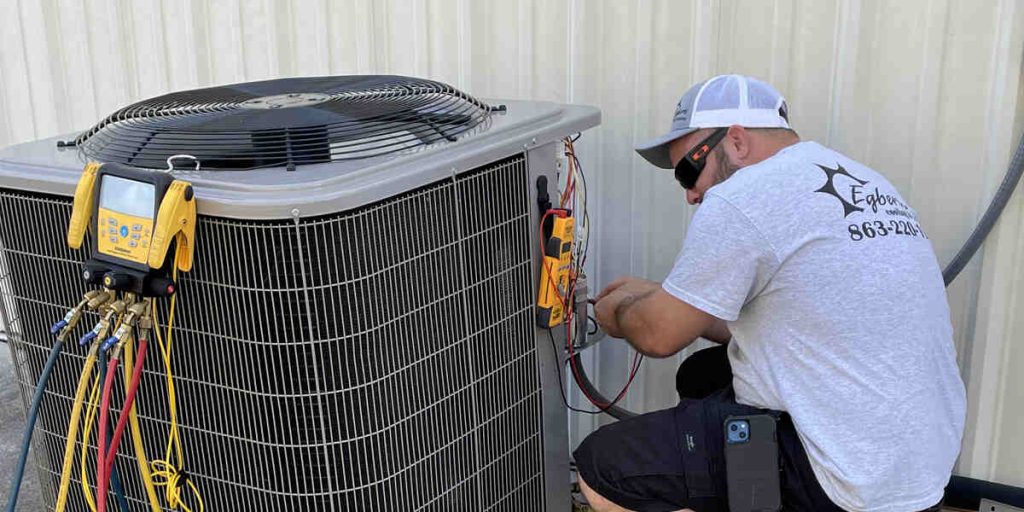
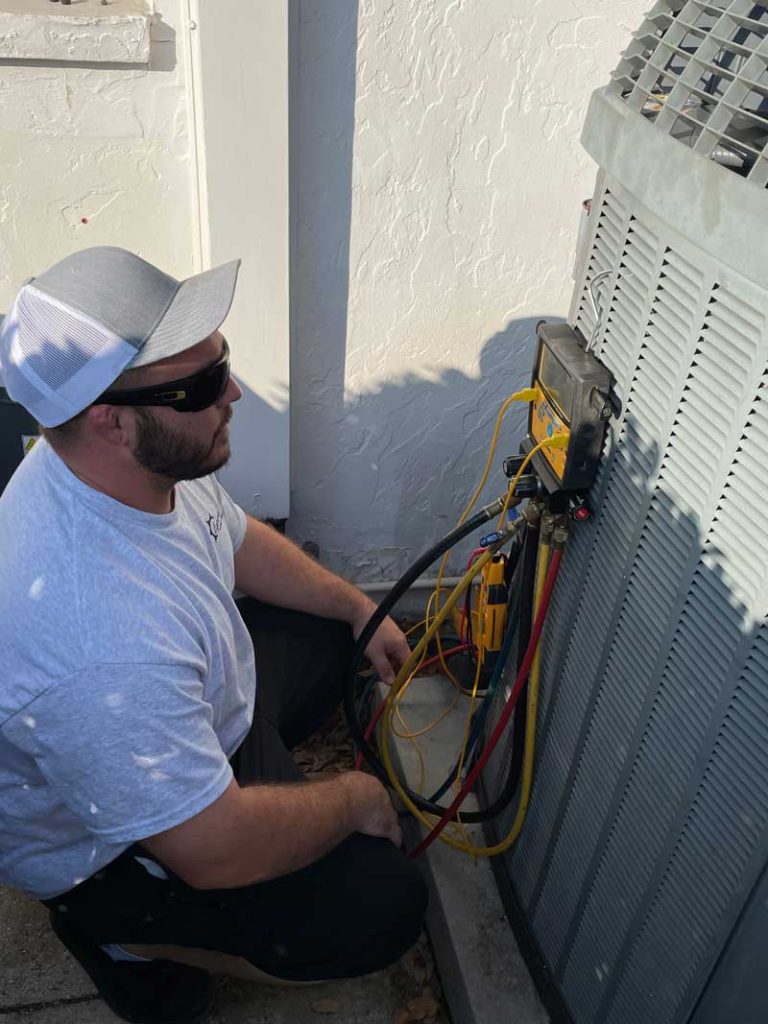
Our inspection pays close attention to the things that fail in a coastal environment. We open the outdoor cabinet, inspect every terminal and contact point, look over the coil for corrosion, and test components under load rather than at rest.
Inside, we check airflow, the drain system, blower condition, and the state of the duct connections where we can reach them. In homes with original attic ductwork we tell you plainly if that is limiting what the equipment can do.
You get the diagnosis, the cost, and our honest read on whether repair or replacement makes better sense for a unit with significant corrosion. Nothing proceeds without your approval, and most repairs finish in a single visit.
Patricia called from her home near East Bay Drive after her heat pump had failed to start twice in one week, each time working again on its own before anyone could look at it.
Our technician found a contactor with heavily pitted contacts and corroded wire terminals inside the outdoor cabinet, a textbook coastal failure. He replaced the contactor, cleaned and resecured the connections, tested a full startup, and rinsed the salt residue off the coil. Patricia has not had a no start since.
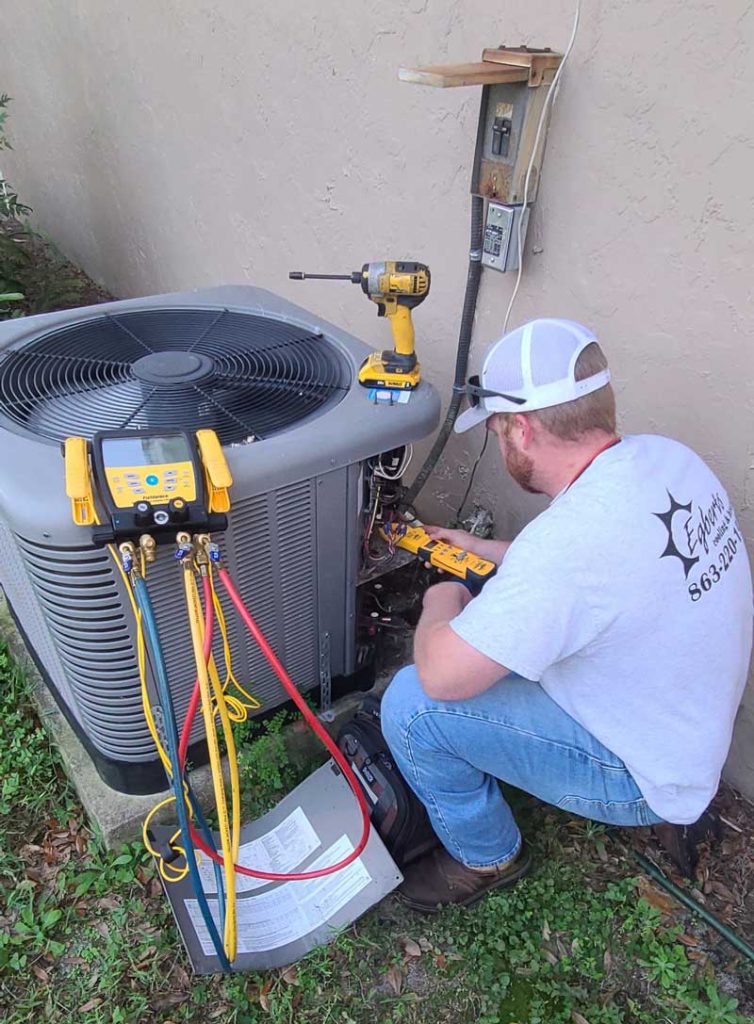

Here is what you get when you hire us for the job.
A heat pump that dies in August is not something to sit on, which is why emergency service is part of what we offer year round.
Salt corrodes coil fins and electrical connections, which lowers efficiency and leads to leaks and intermittent failures over time.
Yes, gently, with the power off. A light freshwater rinse several times a year helps remove salt buildup.
Intermittent failures usually trace back to corroded connections or a failing contactor that makes contact inconsistently.
Often not. Coastal equipment tends to see a shorter service life unless it is rinsed and maintained regularly.
Yes. Emergency service is available for Largo homeowners whenever the system quits.