
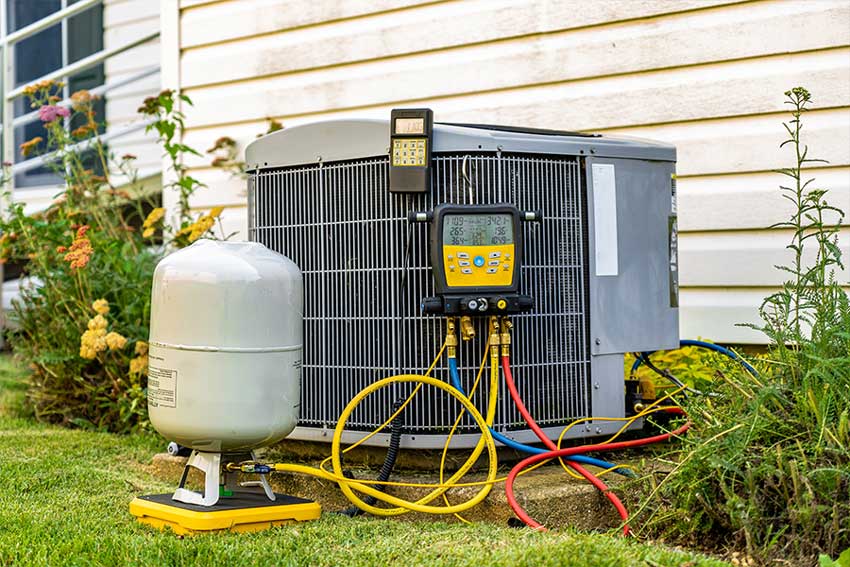
Anyone who has spent a summer in Clearwater knows the routine. The Gulf humidity rolls in, the afternoon heat lingers well past sunset, and your air conditioner runs nearly nonstop from morning to night. Those long cooling cycles keep your home comfortable, but they also put real strain on your system, and one of the most common casualties is the refrigerant circuit.
In our service calls throughout Clearwater and the surrounding Pinellas County area, refrigerant leaks are among the most frequent problems we diagnose during peak season. Understanding why they happen, and how to catch them early, can save you from an uncomfortable breakdown and a costly repair. If your cooling system is acting up, our HVAC services in Clearwater, FL cover everything from diagnosis to long-term system care.
Common Causes of Refrigerant Leaks in HVAC Systems
Refrigerants do not get used up like fuel. In a healthy system, the same charge circulates for years. When levels drop, something has allowed it to escape, and there are a handful of usual suspects.
Wear and Tear Over Time
Every air conditioner ages, and the components that contain refrigerants are no exception. Over years of operation, vibration and constant pressure changes slowly fatigue the copper lines, coils, and fittings. Tiny cracks and pinholes develop, often too small to see but large enough to bleed refrigerant over weeks or months.
Corrosion in Coastal Air
Corrosion deserves special attention here on the Gulf Coast. Working in homes across Clearwater, from properties near the Intracoastal to neighborhoods off US 19, we regularly find formicary corrosion on evaporator coils. Salt-tinged coastal air and constant humidity accelerate this process, eating microscopic tunnels through copper tubing until refrigerant finds a way out.
Improper Installation
If line connections were not flared, brazed, or torqued correctly during installation, leaks can appear early in the system’s life. A poorly sealed joint might hold for a season or two before pressure and heat finally push refrigerant through the weak point.
Physical Damage and Factory Defects
Landscaping equipment, storm debris, and even settling of the outdoor unit can damage refrigerant lines. And occasionally, a coil or component leaves the factory with a defect that only reveals itself once the system is under real-world stress.
How Long Cooling Cycles Contribute to Refrigerant Issues
Here is where Clearwater’s climate makes things harder on your equipment. When outdoor temperatures sit in the 90s with humidity to match, cooling cycles stretch longer and the system rarely gets a chance to rest.
Extended run times mean sustained high pressure inside the refrigerant lines. That constant pressure stresses seals, joints, and connections, gradually working at any weak point until it gives. The longer and more frequent the cycles, the faster this fatigue accumulates.
Long cycles can also signal a system already struggling to keep up. A unit fighting to reach the thermostat setting works harder than designed, running hotter and putting extra strain on the compressor and surrounding components. Heat and pressure together are exactly the conditions that turn a marginal joint into an active leak.
There is a compounding effect, too. Once a small leak starts, refrigerant levels drop, the system loses capacity, and cycles grow even longer to compensate. The problem feeds itself, which is why early detection matters so much. When a leak does show up, professional refrigerant leak repair is the safest way to restore your system without risking further damage.
Signs Your AC Might Have a Refrigerant Leak
Based on what we see in Clearwater properties, refrigerant leaks rarely announce themselves dramatically. They creep in through subtle changes:
- Rising energy bills without a change in your habits, as the system runs longer to deliver the same cooling
- Weaker cooling performance, where the house never quite reaches the temperature it used to hold easily
- Ice buildup on the evaporator coil or refrigerant lines, a classic symptom of low refrigerant
- Hissing or bubbling sounds near the indoor or outdoor unit, which can indicate refrigerant escaping
- Reduced airflow from your vents as the coil ices over and restricts circulation
Any one of these signs is worth investigating. Two or more together strongly suggest a refrigerant problem. It is also worth knowing that refrigerant handling is regulated for good reason. These chemicals require certified technicians with proper recovery equipment, so diagnosis and repair belong in professional hands. If your system stops cooling entirely on a blistering afternoon, our emergency AC services are available around the clock.
The Importance of Regular HVAC Maintenance in Clearwater
The single best defense against refrigerant leaks is routine professional maintenance. In a climate like ours, where systems run eight or nine months of the year, an annual tune-up is not a luxury. It is basic protection for one of the most expensive systems in your home.
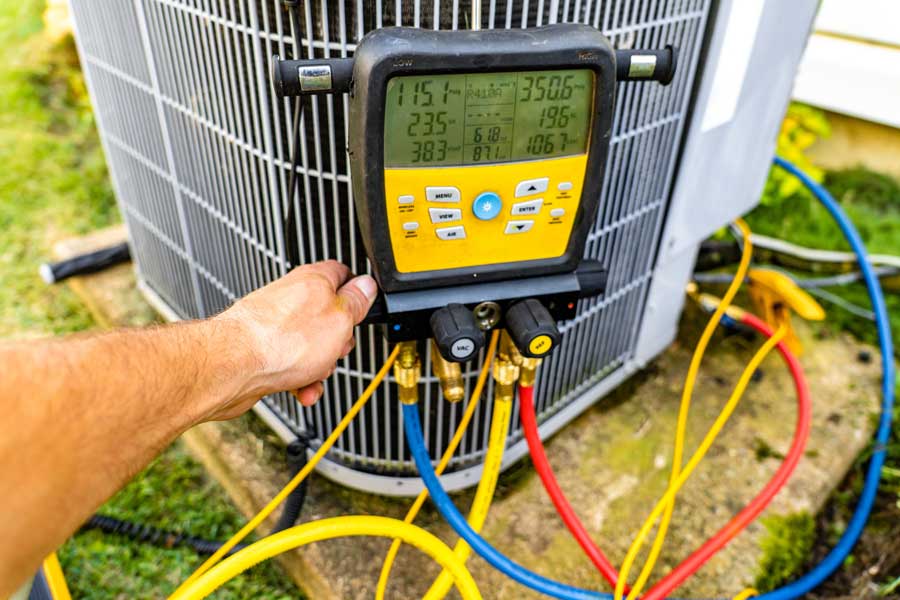
During a professional AC maintenance visit, a technician checks refrigerant pressures, inspects coils for early corrosion, tests connections, and evaluates overall system health. Small issues get caught while they are still small. A slightly low refrigerant reading today points to a pinhole leak that can be repaired now, rather than a failed compressor next July.
Well-maintained systems also run more efficiently. When coils are clean and refrigerant levels are correct, your AC reaches the set temperature faster and cycles off sooner. Shorter cycles mean less pressure stress, lower energy bills, and a longer equipment lifespan. It is a cycle that works in your favor for a change.
Skipping maintenance does the opposite. Problems accumulate quietly, efficiency erodes, and the first obvious symptom often arrives as a breakdown during the hottest stretch of summer, when repair schedules across Pinellas County are at their busiest.
How Egberts Electric and Air Conditioning Can Help
At Egberts Electric and Air Conditioning, our certified technicians handle refrigerant issues every day of the cooling season. We use proper leak detection methods to find the actual source of the problem, not just top off the charge and send you on your way. Recharging a leaking system without repairing it wastes money and refrigerant, and the problem always comes back.
When we assess your system, we give you straightforward findings and personalized recommendations based on what we actually observe. Sometimes a leak calls for a targeted repair. Other times, especially with an aging coil showing widespread corrosion, we will walk you through whether repair or replacement makes better long-term financial sense. Either way, you get transparent pricing with no hidden costs, so you can make the decision that fits your home and budget.
Our team is also available 24/7 for emergencies, because AC failures in a Clearwater summer never seem to happen at a convenient time.
Protecting Your Cooling System Through Clearwater’s Long Summers
Refrigerant leaks are a natural risk in a climate that demands so much from air conditioning equipment. Long cooling cycles, coastal humidity, and salt air all work against your system over time. But leaks are also largely preventable, and almost always manageable when caught early.
Pay attention to the subtle signs: creeping energy bills, weaker cooling, ice on the lines, or unusual sounds from the unit. And give your system the routine professional care it needs to stand up to the demands of a Gulf Coast summer.
If you suspect a refrigerant leak or your system is due for a checkup, schedule your service today and let the Egberts Electric and Air Conditioning team keep your home cool and comfortable all season long.