
How long do AC capacitors last? Most last between 5 and 20 years, depending on heat exposure, runtime, power surges, installation quality, and maintenance. In Florida, where air conditioners run for most of the year, capacitors often wear out toward the shorter end of that range, especially in outdoor units that sit in direct afternoon sun.
A failing capacitor is one of the most common reasons homeowners call for AC repair in Clermont, FL and throughout Central Florida. Our technicians at Egberts Electrical Plumbing Air Conditioning replace capacitors all through the cooling season, and the guidance below comes from what we see on those service calls.
Key Takeaways
- Most AC capacitors last between 5 and 20 years, and Florida’s long cooling season pushes many toward the shorter end.
- An AC capacitor stores and releases an electrical charge that helps the compressor and fan motors start and keep running.
- Power surges, heat, heavy runtime, poor installation, and skipped maintenance are the main causes of early capacitor failure.
- Humming, hard starts, warm air, and a system that shuts off mid-cycle are common signs of a weak capacitor.
- Capacitor replacement belongs with a trained technician because the part can hold a dangerous charge even with the power off.
What Does an AC Capacitor Do?
An AC capacitor is a small cylindrical component that stores electrical energy and releases it to start and run the motors in your air conditioner. It works almost like a battery, giving the compressor and outdoor fan motor the extra push they need to get moving and stay moving.
When the thermostat calls for cooling, the motors need more power to start than they need to keep running. The capacitor supplies that boost. If it weakens or fails, the air conditioner struggles to function and may not turn on or circulate conditioned air at all.
Most residential systems use one or more of these capacitor types:
- Run capacitor: Supplies a steady charge that keeps a motor running smoothly and efficiently once it has started.
- Start capacitor: Delivers a short, strong burst of energy to get the compressor turning, then drops out of the circuit.
- Dual run capacitor: Combines two run capacitors in one case so a single part serves both the compressor and the outdoor fan motor.
Because a dual run capacitor serves two motors, a failure in that one part can stop the entire outdoor unit.
How Long Do AC Capacitors Last in Clermont?
In Clermont and the rest of Central Florida, AC capacitors typically last somewhere between 5 and 20 years, and many fall short of the upper end. The range is wide because location, usage, and care all affect how long the part holds up.
Manufacturer ratings help explain why runtime matters so much. Cornell Dubilier, a major capacitor manufacturer, rates its oil-filled motor run capacitors for a service life of 60,000 hours. A capacitor in a Clermont home runs through long cooling cycles nearly every day from spring into late fall, so it uses up its rated hours much faster than the same part in a cooler climate.
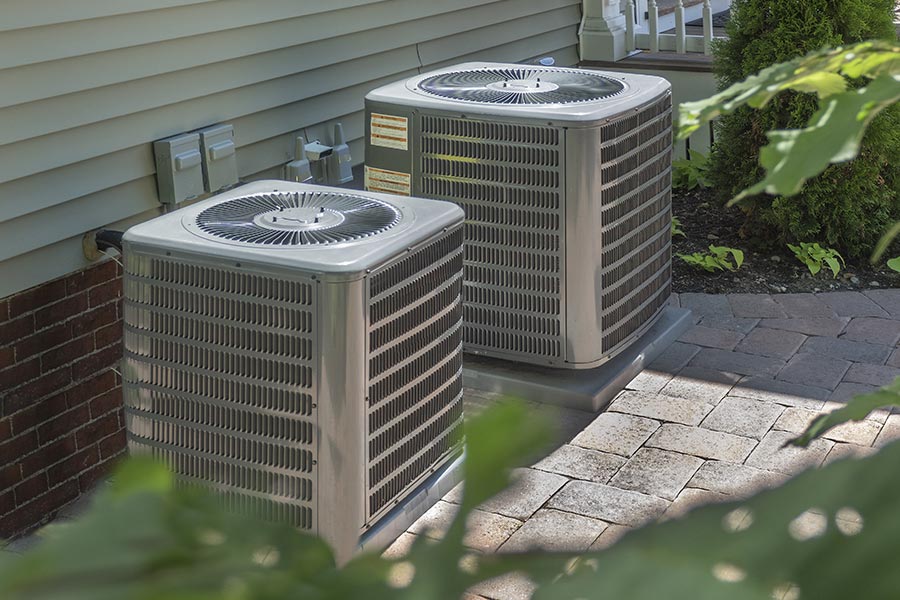
Heat adds to the strain. The capacitor sits inside the outdoor condenser unit, where it absorbs heat from the sun, the hot pad below it, and the running compressor beside it. Working in homes across Clermont and Lake County, we often find that capacitors in units facing west or sitting on sun-baked concrete pads fail sooner than those in shaded spots.
Common Reasons AC Capacitors Fail Early
An AC capacitor can reach the end of its life early for several reasons, and most of them trace back to stress on the electrical system or the outdoor unit. These five causes account for most of the early failures we see in Clermont and neighboring communities:
1. Poor Installation
A capacitor has to match the motor it serves in both microfarad rating and voltage. When a technician installs the wrong rating, or when the original AC installation left loose or undersized wiring, the capacitor works harder than it was designed to and can fail prematurely.
2. Power Surges
A capacitor is built to receive, store, and release current to the motors, but too much power at once can destroy it. Lightning strikes and utility grid fluctuations during Central Florida’s frequent summer thunderstorms can send a surge through the system that leaves the capacitor unusable. A whole house surge protector adds a layer of protection for the capacitor and the rest of the system’s electrical components.
3. Excessive Usage
Every start cycle draws on the capacitor, so a system that runs constantly wears the part out faster. If you rely heavily on your air conditioner to keep your Clermont property cool, expect to replace the capacitor sooner than a homeowner in a milder climate would.
4. A Lack of Maintenance
Regular inspection is the best way to get the full life out of a capacitor. During an annual AC maintenance visit, a technician measures the capacitor’s output against its rated value, tightens electrical connections, and cleans the condenser coil so the outdoor unit runs cooler. A capacitor that tests weak can be replaced on a scheduled visit instead of failing on the hottest afternoon of the year.
5. Excessive Heat
Heat breaks down the materials inside a capacitor over time. Outdoor units that bake in full sun, have blocked airflow from overgrown shrubs, or run with a dirty condenser coil keep the capacitor hotter than it should be, which shortens its life.
Signs Your AC Capacitor Is Failing
A failing capacitor usually shows up as trouble starting or staying on. The system may still run for a while, but it often overheats, makes unusual noises, or shuts down before the cooling cycle ends.
Watch for these warning signs that point to a weak or failed capacitor:
- A humming or buzzing sound from the outdoor unit while the fan does not spin
- An air conditioner that takes several tries to start or clicks without starting
- Warm or lukewarm air coming from the vents
- A system that shuts off before reaching the thermostat setting
- A noticeable rise in energy bills as the motors strain to start
During an inspection, a technician may also find a capacitor with a swollen top or oil leaking from the casing. Both are clear signs the part needs replacement.

Why AC Capacitor Replacement Requires a Professional
Capacitor replacement should always be handled by a trained HVAC technician. A capacitor can hold a strong electrical charge even after the power is shut off, and contact with the terminals can cause a serious shock.
The replacement part also has to match the original’s microfarad rating and voltage exactly, and capacitors come in many sizes for different systems. Installing the wrong one can damage the compressor or fan motor.
There is also a diagnostic side to the job. In our service calls around Clermont, a capacitor that fails twice in a short span usually points to a deeper problem, such as a motor drawing too much current or a loose connection overheating the terminals. A technician checks for those causes so the new capacitor does not meet the same fate.
Frequently Asked Questions About AC Capacitors
Do AC Capacitors Have a Shelf Life?
Yes, unused capacitors can still degrade over time, though much more slowly than one in service. Heat and humidity during storage can affect the internal materials, so technicians test a stored capacitor’s output against its rating before installing it.
Can an Air Conditioner Run With a Bad Capacitor?
An air conditioner may still turn on with a failing capacitor, but it usually will not run normally for long. Expect overheating, loud humming, and shutdowns before the cooling cycle ends. Continuing to run the system this way puts extra strain on the compressor and fan motor.
How Long Do Heat Pump Capacitors Last?
Heat pump capacitors face the same wear factors as AC capacitors, plus extra runtime. A heat pump uses its compressor and outdoor fan for both cooling and heating, so its capacitor often logs more hours each year than one in a cooling-only system.
How Often Should an AC Capacitor Be Tested?
A capacitor should be tested at least once a year during routine maintenance. Testing shows whether the part is still delivering its rated output, which lets a technician replace a weakening capacitor before it causes a breakdown.
How Much Does It Cost to Replace an AC Capacitor?
The cost depends on the capacitor type and rating, whether it is a single or dual run part, and whether the failure damaged any other components. A technician can give an accurate price after diagnosing the system and confirming the capacitor is the only part that needs replacement.
Keeping Your Clermont AC Running Through the Cooling Season
So, how long do AC capacitors last? Most last 5 to 20 years, and Central Florida’s heat and long cooling season often shorten that span. Regular testing and quick replacement of a weak capacitor protect the more expensive motors it supports.
Egberts Electrical Plumbing Air Conditioning tests, diagnoses, and replaces AC capacitors for homeowners in Clermont and across Central Florida as part of complete AC repair and maintenance service. If your system is humming, struggling to start, or blowing warm air, schedule an AC inspection with our team.